
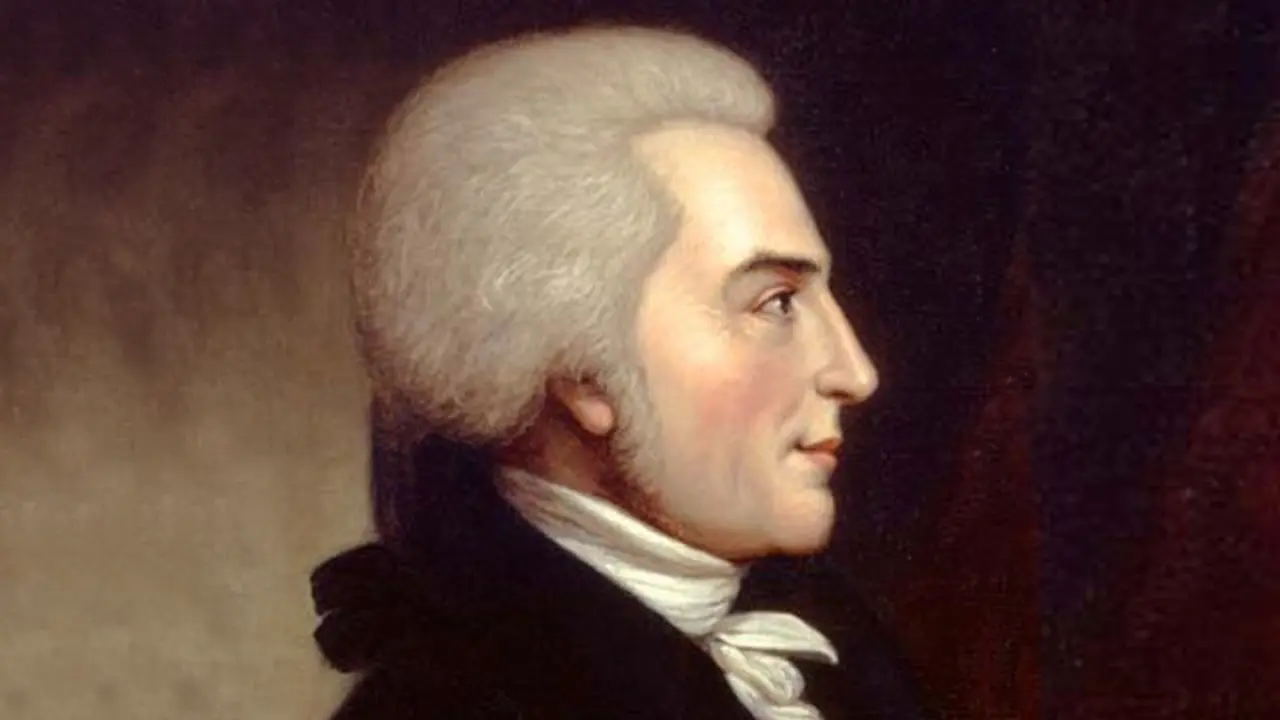
The Family of William Richardson Davie
|
1756 |
WILLIAM RICHARDSON DAVIE was born on June 22 in Egremont Parish, Cumberlandshire, England to Scottish Presbyterian parents, Archibald Davie 1724-1800 and wife, Mary Richardson 1723-1767. |
|
1764 |
Most accounts agree that the Reverend William Richardson, the brother of Mary Richardson, financed the transportation of Archibald and Mary, along with their three children, to America to settle in the Waxhaws area along the Catawba River along the border of NC and SC. Reverend Richardson was is the minister at the Waxhaw Presbyterian Church, an early church that was mostly populated with “backwoodsmen” Scot-Irish or Scottish Presbyterians. |
|
1767 |
Mary Richardson Davie, wife of Archibald, dies leaving a husband with eleven year old son William Richardson, eight year old daughter Mary Magdalene, and five year old son Joseph. |
|
1771 |
His uncle, the Reverend William Richardson,died at age forty-two, mysteriously and controversially. |
|
1774 |
Davie enrolled in the College of New Jersey (later Princeton University) whose president was Reverend John Witherspoon, a Presbyterian with family connections in the Waxhaws area. Witherspoon was a signer of the Declaration of Independence. |
|
1776 |
Battle of Moore’s Creek Bridge near Wilmington, conflict between loyalist and patriots, is the first instance of blood being shed in NC. The 4th Provincial Congress, made up of 83 delegates from counties and towns, met in Halifax, NC, and unanimously approved a resolution, the Halifax Resolves, which directed the three NC representatives at the Continental Congress in Philadelphia to vote for independence from England. With blessings from the college’s president, Dr. Witherspoon, Davie left the College of New Jersey to volunteer with the militia in the Waxhaws. Six months later, he returned to school to take his exams and received a degree in the first honor. |
|
1777 |
Davie moved to Salisbury, Rowan County, NC, to read law with Judge Spruce Macay, a noted attorney and judge. |
|
1778 |
Davie interrupted his legal training in Salisbury to enroll in military service with a detachment of militia raised in NC under General Allen Jones of Northampton County, NC and led troops in the Battle of Charlotte. |
|
1779 |
Davie was promoted to Captain of a NC Light Dragoons Regiment and shortly thereafter, Major of Calvary in 2nd Mecklenburg County Regiment. At the Battle of Stono, fought at Stono Ferry, SC on June 20, Davie received a wound to his thigh which required a year to heal. While convalescing, he resumed law studies, obtaining his license to practice law in Rowan County at the special request of Richard Caswell. |
|
1780 |
Davie reenters military action as Major over Independent Corps of Light Horse. He served in military skirmishes along the NC/SC line against General Lord Charles Cornwallis including at Wahab’s Plantation where they routed the enemy. Cornwallis referred to this area of the country after harassment of his troops by the patriots as a "Hornet's Nest". |
|
1781 |
General Nathanael Greene appointed Davie to be commissary-general for Carolina campaign with the challenging mission of furnishing arms and supplies to the troops. |
|
1782/3 |
Davie married Sarah Jones, the daughter of General Allen Jones, and moved to her home county of Northampton County, NC, but a year later, Davie and his wife purchased land on the other side of the Roanoke River in Halifax County in the town of Halifax, an important trade community and built his family home, “Loretta”. Davie engaged in the practice of law in five of the six judicial districts in NC. |
|
1784 |
Davie won his first seat in the NC House of Commons, ultimately serving ten terms, twice representing Northampton County and eight times representing the town of Halifax. |
|
1785 |
Davie and his wife have their first child, a son, Allen Jones Davie. |
|
1786 |
Davie continued to serve in the NC House of Commons where he focused on revising and codifying NC Laws, investigating boundary issues, reviewing monetary issues, and promoting education. Davie obtained a charter to establish Warrenton Academy. Davie and his wife have their second child, Hyder Ali Davie. |
|
1787 |
Davie was chosen as one of NC's five delegates to the Constitutional Convention in Philadelphia along with Governor Richard Caswell, Willie Jones, Alexander Martin and Richard Dobbs Speight Sr. Willie Jones refused to serve and the governor appointed Hugh Williamson. |
|
1788 |
Davie was elected to state convention at Hillsborough where they considered ratification of the newly proposed Federal Constitution. |
|
1789 |
An advocate for education and aware of a provision in the 1776 state constitution which specified establishment of affordable schools and universities, Davie introduced a bill in the state legislature to charter the first state university which later became the University of North Carolina at Chapel Hill. |
|
1790 |
Davie and his wife have a third child, a daughter, Mary Haynes Davie. |
|
1791 |
Davie became a member of the free masons. He was also elected as a member of the NC House of Commons serving additional terms in 1793, 1794, 1796, and 1798. He was appointed as one of the commissioners to work on resolving the boundary dispute between NC and SC. |
|
1792 |
Davie was elected as Grand Master of Grand Lodge of Ancient Free and Accepted Masons in NC and Tennessee, serving for seven consecutive years. He also was part of a committee to “seat the university”, selecting a location near “Newhope Chappel Hill”. Davie introduced a bill to establish a permanent residence for officials of NC which resulted in the purchase of the Joel Lane plantation where the new capital of Raleigh was laid out. |
|
1793 |
As the Grand Master of the Grand Lodge of North Carolina, Davie presided over the laying of cornerstone for the first building, “Old East” on the campus of the new state school on October 12th in Chapel Hill, NC. Davie and his wife have their fourth child, a daughter Sarah Jones Davie. |
|
1796 |
Davie is appointed by the legislature to settle boundary issue between SC and NC. Davie and wife have a fifth child, a second daughter, Martha Rebecca Davie. |
|
1798 |
WR Davie was elected by the General Assembly on the Federalist ticket as the 10th governor of NC. |
|
1799 |
Before his term as governor was completed, President John Adams appointed Davie as a special envoy to France to negotiate agreements on amity and commerce to resolve the XYZ affair, an undeclared naval war with France. |
|
1800 |
Davie returns from France. Davie and his wife have a sixth child, son Frederick William Davie. |
|
1801 |
Davie is appointed by President Thomas Jefferson to head a commission that will arbitrate a treaty with the Tuscarora Native Americans, who now mostly lived out of the state. |
|
1802 |
Davie's wife, the thirty-nine year old Sarah Jones Davie, died in Halifax leaving Davie with children Allen, age 17, Hyder, age 16, Mary Haynes, age 13, Sarah, age 10, Martha Rebecca, age 7, and Frederick, age 3. |
|
1803 |
In Halifax County, Davie lost the election to incumbent Willis Alston Jr. (1770-1837). Davie is appointed by legislature to assist in settlement of another issue of the boundary between SC and NC |
|
1805 |
Discouraged with politics, Davie retired and relocated from Halifax NC to his South Carolina plantation, "Tivoli". Davie's son continued to live in the Halifax home. |
|
1807 |
Davie ends his eighteen years of service on the Board of Trustees for the university. |
|
1809 |
Davie purchased a champion race horse, Sir Archie, from William Ransom Johnston of Warren County, NC, for the sum of $5000. Davie gave the horse to his son Allen who kept him at the stables near Halifax, NC but in 1816, Allen had to sell the horse to settle some financial debts. |
|
1810 |
Davie was cited as the "Father of the University" by the trustees of the university in recognition his 23 years of unceasing efforts. |
|
1811 |
WR Davie received the first honorary doctorate of laws from the University. |
|
1812 |
Davie declined an offer from President James Madison to become major general in command of the American forces in the War of 1812. |
|
1815 |
Hampered now with rheumatism, Davie began to make regular visits to the Warm Springs. |
|
1819 |
Davie was appointed by governor of SC as a commissioner on the Board of Public Works in South Carolina. |
|
1820 |
At age 64, WR Davie died at Tivoli Plantation and was buried the Old Waxhaw Presbyterian Church cemetery in Lancaster County, SC just across the Catawba River from his plantation. |