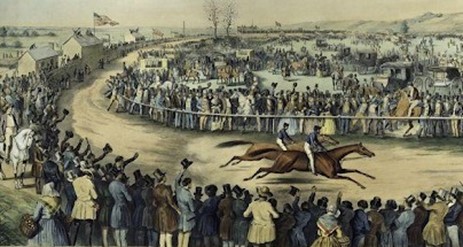
 Horse racing was one of the most popular spectator sports in North Carolina during the colonial period. Planters imported expensive English breeding stock to Virginia and North Carolina and gradually began to purchase, breed, train, and race horses that dominated the sport. The prominent Halifax resident, Willie Jones, had a race track at the home, "The Grove", near Quankey Creek. It is said that he had the first picture window, built so he could watch the horses from his home.
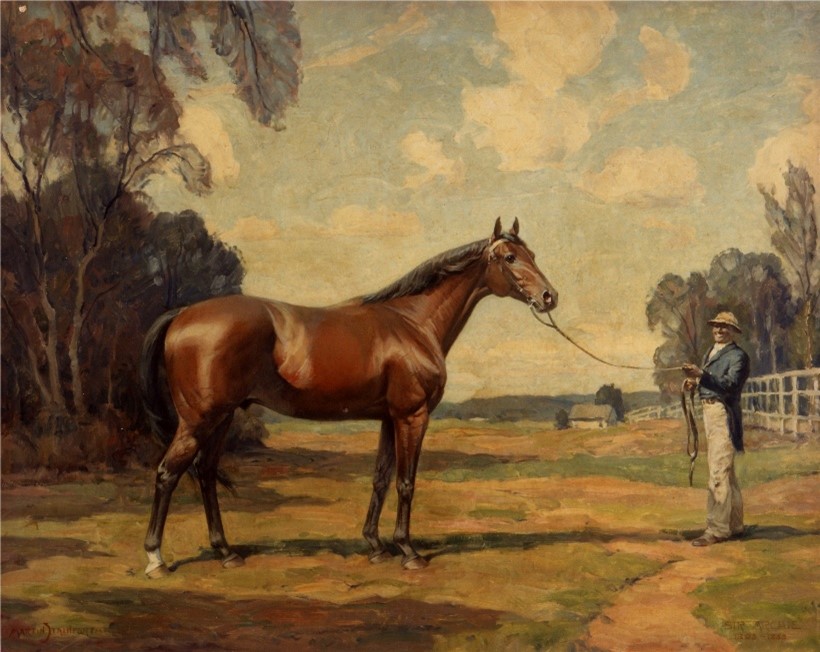
Gambling on horse races was widespread among all classes. One the most famous horses, Sir Archie (1805-33), was owned by another resident of Halifax, WR Davie. Sir Archie both won races and sired generations of winners that continue to dominate horse races today.
Willie Jones had an enslaved horse jockey named Austin Curtis who won many races. Curtis achieved great skill as a trainer and a jockey. Together, Willie Jones and Austin Curtis won large amounts of money and goods such as tobacco and horses. In one race, Curtis famously took his foot out of the stirrup and wiggled it just before the horses were due to begin the race, fooling, his competitor into thinking he wasn’t ready.
 Curtis also served for a time in the Revolutionary War. In 1781, when Lord Cornwallis was approaching Halifax, Curtis protected Willie Jones’s valuable racehorses from the British when by hiding them so they could not be confiscated by the army on their march into Virginia.
It was against the existing law to free enslaved and Willie Jones filed a petition with the colonial assemby to emancipate Austin Curtis on December 5, 1791. Curtis lived the rest of his life as a free person. He continued breeding and training horses earning himself a comfortable living.
A local planter, Marmaduke Johnson consulted with Curtis to select the mare for his stables and that mare would become the ancestor of great racehorses named “Reality,” Bonnets o’ Blue,” and “Fashion.”
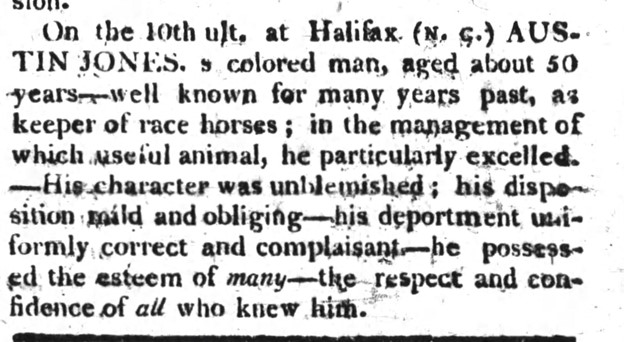
By the time Curtis died in 1808, he owned more than 300 acres of land near Halifax. He had been able to purchase the freedom of his son William as well as ensure the freedom of at least eight of his other children. The January 5, 1809, edition of the “Raleigh Minerva” published an obituary for Austin Curtis that said, “He possessed the esteem of many—the respect and confidence of all who knew him.”