
We are looking forward to a renovated visitors center that will formally open in April of 2026. The exhibit areas will also be updated and completed soon after the opening. Including in the exhibit area will be a special, climate-controlled viewing window that can showcase authentic documents and artifacts.
The staff at the historic site currently has temporary offices at the Tap Room and the historic site is open from Tuesday to Saturday.
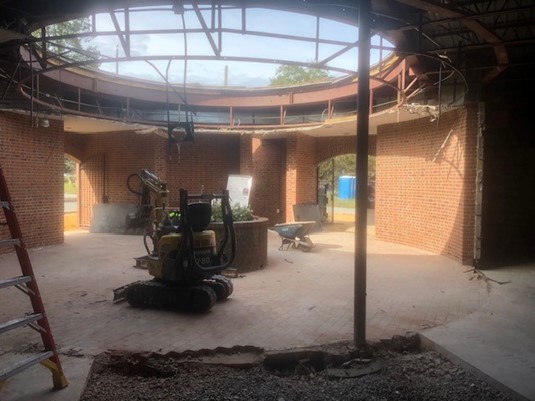
SPOTLIGHT: The outside patio area will showcase a design by artist Senora Lynch of the Haliwa-Saponi Tribe.
Senora Richardson Lynch
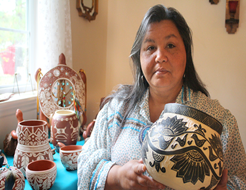 Senora Richardson Lynch is a contemporary Native American potter known for her creative designs that feature the symbols of Native American mythology. She was a 2007 winner of the North Carolina Heritage Award, the 2013 recipient of the Lifetime Achievement Award from the River People Music and Culture Fest, and is recognized nationally for unique style of detailed, hand-coiled pottery. Lynch is a resident of Warren County, North Carolina.
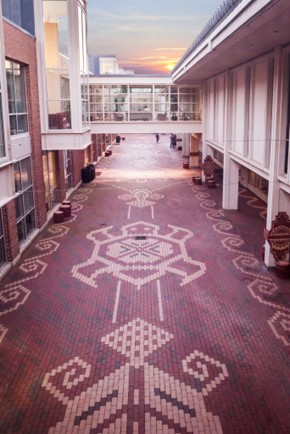
Lynch designed walkways on the campus of the University of North Carolina at Chapel Hill, an interesting connection to Historic Halifax, since the father of this university was William Richardson Davie who lived for many years in Halifax and his home is part of the historic site.
“I’ve always been inspired by the spirit of clay,” says Senora Lynch, an artist who calls her pottery Living Traditions. Lynch became interested in making pottery at the age of fourteen, when she assisted her tribe’s elders with a pottery class. Years later, Senora met a tribal potter who agreed to teach her the craft of hand-coiling, thus renewing her interest, and creating her own style of hand carved pottery. She’s been a potter ever since.
Old sayings and stories from the Haliwa-Saponi inspire Lynch’s unique designs, as does the natural environment. Lynch creates her pottery at home using the traditional hand-coiling method. First, she pounds red clay and rolls it into long ropes. Next, she coils the ropes and stacks them to form the desired vessel’s shape, which is done by pressing them together. She then smoothes the clay with her fingers and scrapes it with a tool to make the coils stick together. Finally, she polishes the vessel with a rock to make it smooth and shiny. To create a design, Lynch places white clay on top of the red clay and uses a tool to etch beautiful patterns. The vessel is then fired in a kiln.
The process results in exquisite pottery which has been exhibited at the North Carolina Museum of History, 1996 Olympic Games in Atlanta, Smithsonian National Museum of the American Indian and the National Museum of Women in the Arts.